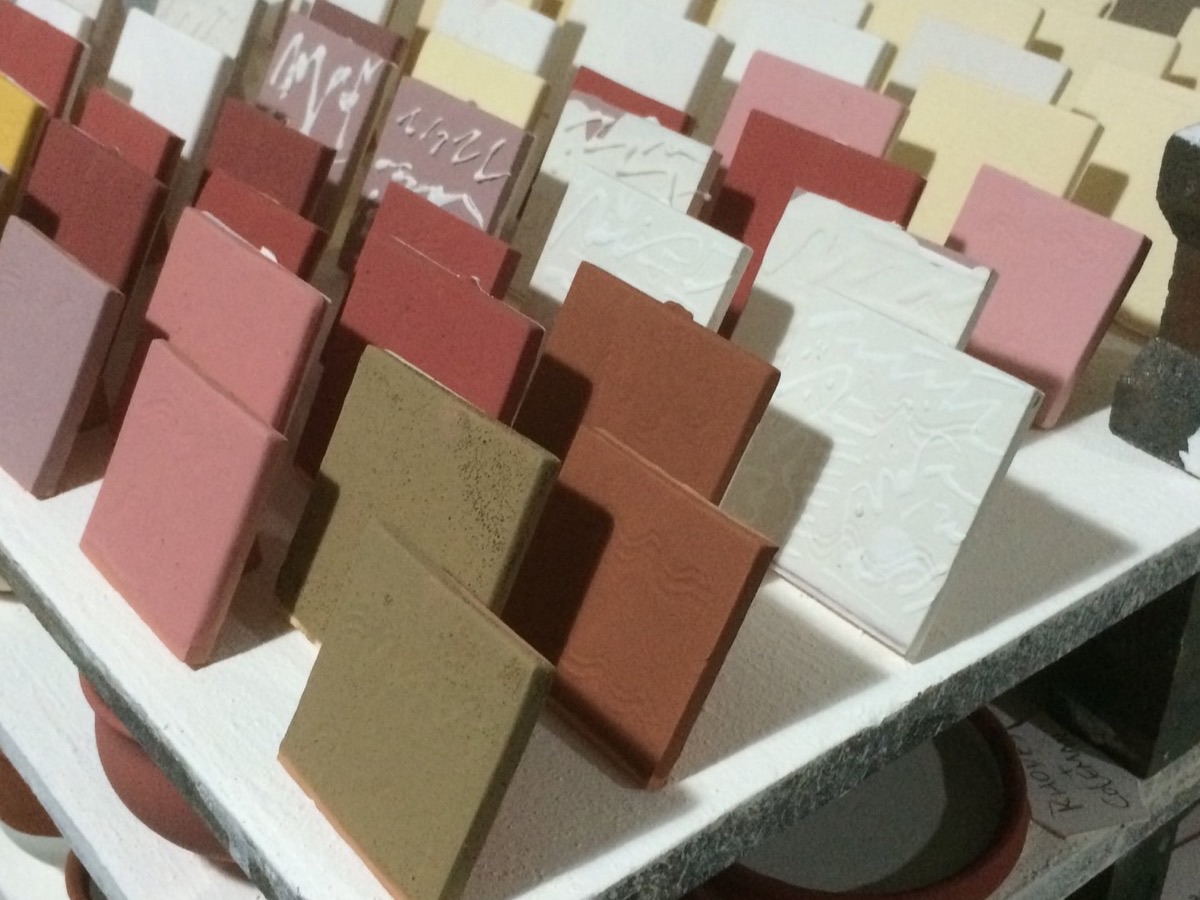
Level shelves, wadding, cones in view and a last walk with a torch: ninety seconds of care that decides somebody's fortnight.
The kiln is the only part of the studio with the final say. You can throw well, trim carefully and glaze exactly as intended, and still open the lid on a shelf of pieces stuck to a batt, slumped, or crawled. Loading is where you try to make that less likely.
It is also the most communal job here. Three people's work goes into one firing, which means every decision on the shelves is a decision about somebody else's fortnight.
Shelves first, and level
The bottom shelf sits on three posts, never four, and never on the element grooves. Posts go directly above each other up the stack, or the shelves above will sag into the ones below at temperature. Check level with a straight edge; a shelf that tilts by a millimetre cold will have moved by the time the clay is soft.
Fresh kiln wash goes on thin and even, and dries before anything is set down. A thick coat flakes onto the work, and a missing patch lets a run glaze weld a pot to the shelf for good.
What carries the weight
Glazed bases are wiped clean and, where a piece is fully glazed, set on stilts or wadding. Wadding is alumina and kaolin pressed into small pads; it holds a pot off the shelf and crumbles away afterwards. Stilts do the same job with more metal and less patience.
Nothing heavy goes on the top shelf and nothing tall goes under a low one. Leave a finger's width between pieces. Glaze expands as it melts, and a tight row becomes a single object by cone six.
Furniture is inspected before every load. A shelf with a hairline crack goes to the back of the rack, a warped one goes out. A post with a chipped end sits on a bat rather than directly on the element groove. Kiln wash is cheap; a collapsed stack at 1200°C is not.
Tall pieces go on the middle shelves where the posts carry them, and they go in first, before the stack closes around them. Anything over forty centimetres is measured against the chamber before it is glazed, not after.
Packing density and the path of heat
A loosely packed kiln fires unevenly: the edges take the heat first and the middle lags behind. A tightly packed one is steadier, but it is also a room full of things touching. The balance is a moderately full stack with clear paths for flame and air, and the work spread across two firings rather than crammed into one.
Pyrometric cones go where they can be seen through the peephole, on every level, in view. A controller is a good servant and a poor witness; the cones tell the truth about what the work actually received.
The last look before the lid
Walk the stack once with a torch. Check every base for a missed wipe, every rim for a bead of glaze, every post for a proper seat. Look for a tool left on a shelf and a piece leaning on its neighbour. Then close the lid, drop the catches and start the programme.
Most kiln disasters are visible in that last minute. The walk costs ninety seconds and has saved me more than any alarm on the controller.
Unloading is the other half of the same care. Let the kiln come down on its own schedule, crack the lid at a hundred degrees, and lift pieces out with two hands and a cloth. Warm ware goes on a wooden bat, never on a cold bench, because thermal shock does not care how well the pot was loaded.