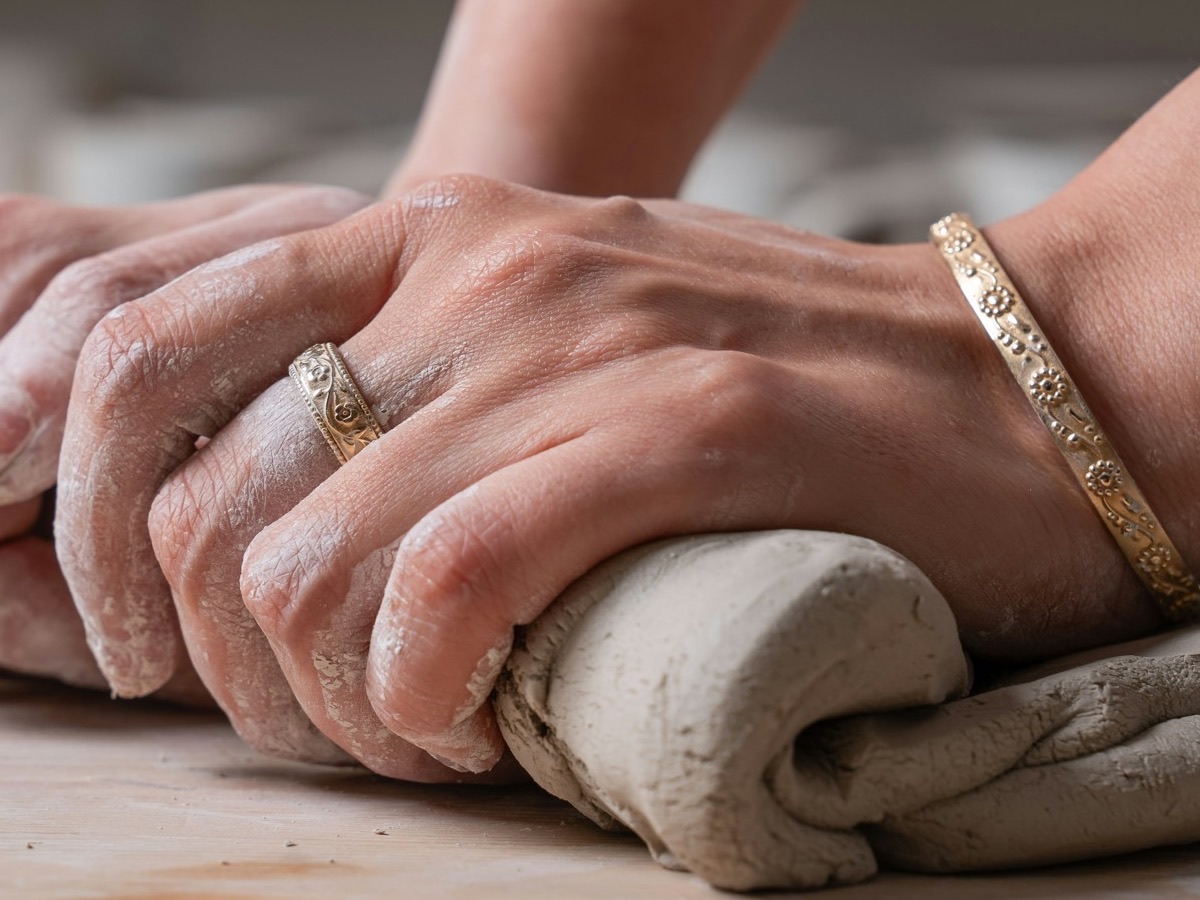
Shrinkage figures, grog and a fortnight of sample tiles: the least romantic decision in pottery is the one that decides whether a piece survives.
There is a bag of clay in the storeroom that I keep for teaching. It is a coarse, grogged stoneware and it is horrible: short, hungry, and it scratches the hand at the wedge. It is also the best thing in the room for somebody learning to pull a wall, because it holds its shape and forgives a thick section. Nothing about it is elegant. That is the point.
Choosing a clay body is the least romantic decision in pottery and the one that most determines whether a piece survives its first firing. It is also the decision beginners make fastest, usually from a photograph of the bag.
Start with what the piece has to survive
A mug needs a body that takes a handle without slumping and a glaze without shivering. A garden sculpture needs frost resistance and can be as coarse as gravel. A raku piece wants a body that shrugs off thermal shock. A dinner plate wants something that will stay flat at 1240°C. Work backwards from the use, not forwards from the colour of the bag.
The main families are simple, and none of them is a personality. Earthenware matures low, stays porous, and chips at the rim in a way that shows. Stoneware vitrifies and takes a knock. Porcelain is beautiful, translucent and merciless, and there is no shame in leaving it until the third year.
Plasticity, grog and the feel of a bag
Plasticity is the clay's willingness to bend without tearing. Grog is fired clay, ground and added; it opens the body, reduces shrinkage and gives the wall a grip. A highly plastic body is lovely to throw and dreadful to dry, because it wants to move. A heavily grogged body dries honestly and throws like suet.
Most suppliers describe this in code, in the small print under the name. Read the shrinkage figure. Anything over twelve per cent is going to make handles and lids a maths problem, and anything under six will fight you at the wheel. Read the firing range too, and check that it matches the kiln you actually have, not the one you plan to own.
Test tiles before a whole box
Order a sample, not a pallet. Make twenty small tiles from the sample and put them through the firing you actually use, with the glaze you actually use. Pencil the batch code onto each tile before it goes in the kiln, because afterwards you will not remember which was which, however certain you feel now.
Then handle the fired tiles for a week. A body that feels chalky, rings dull or chips at the corner is telling you something the wet bag could not. Leave a tile in water for a day and see how it takes a stain. Put one in the freezer in a puddle and let it thaw.
Buying in winter
Clay freezes. A bag that has spent December on a pallet in a cold yard arrives with ice in the seams, and although it can be revived, it is never quite the same body. Ask how it has been stored. If the answer is vague, buy in spring and keep a fortnight's worth in the damp cupboard rather than a season's worth in the shed.
None of this is the fun part. But the bag you choose decides the kind of pot you are able to make, and choosing it deliberately is the first real piece of throwing.