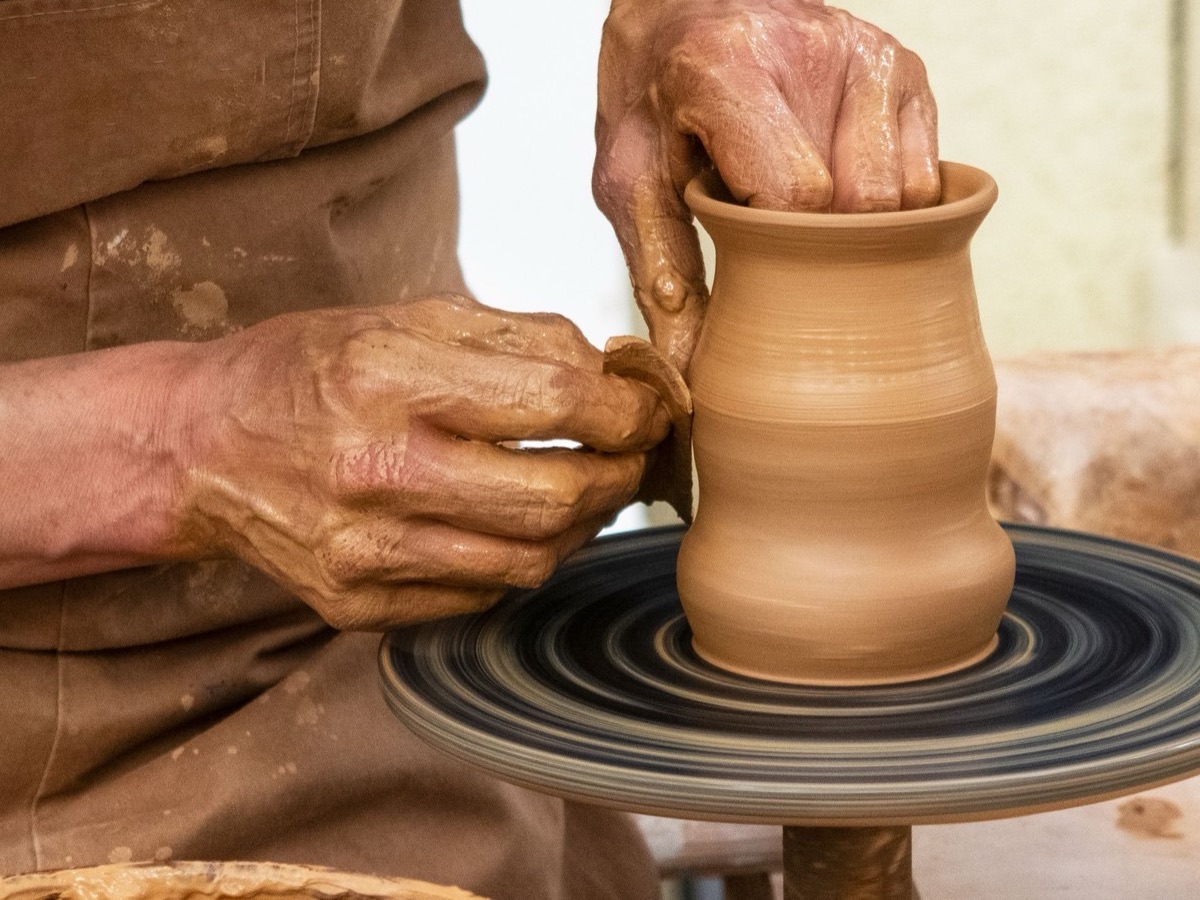
Before the wheel, the kettle: sweeping, wedging and setting out the day. The first hour is not making time, and that is exactly why it matters.
The studio is at the end of a cobbled yard behind a timber merchant. In November it is cold enough that the first thing I do is fill the kettle — not for tea. The kettle goes on for the plaster batts, the water jar on each wheel and the warm cloth that softens the rim of a bag of clay that has spent the night by the door. By the time it boils, I have opened the shutters and swept yesterday's trimmings off the floor.
People imagine that a potter's morning starts with a lump of clay and a dramatic kick of the wheel. Mine starts with a broom. The sweep is not a chore to be got out of the way; it is the ten minutes in which the studio tells me what happened while I was asleep. A crack in the floor slab. A draught under the back door. The damp patch that creeps along the wall in wet weather. All of it is easier to read before the wheels start.
The kettle comes before the clay
Wedging comes next, and only the amount I will use before lunch. Clay that has sat in the bag for a fortnight has developed a grain and a mood of its own. Slamming a whole box about at seven in the morning is a young person's game. I wedge what I need, in small batches, and leave the rest in the damp cupboard with a slip of water in the tray.
There is a version of this work that is all production and no preparation, and it looks impressive for about a month. Then the wrists complain, the pieces crack at the join and the studio fills with half-finished things nobody wants to trim. The morning routine exists to stop that. It is slow on purpose, and it is the reason I can still throw for five hours at fifty-one.
An order that protects the work
Two others share this space. Ines throws tall cylinders and hates my radio station. Tom builds slabs and is quieter than both of us put together. We keep a rota on the back of the door for the kiln and for the shared jobs: slop disposal, shelf washing, the filter on the settling tank. The rota is not bureaucracy. It is the only reason three people can work in one room without somebody's firing being ruined by somebody else's impatience.
My own order is boring and it works. Soft clay first, because the morning body is stiff and the first hour should be gentle. Handles and attachable parts at midday, when the pieces are leather-hard and the joins will hold. Then the wheel again for anything that has dried too far to finish, which becomes tomorrow's trimming.
What the phone is not allowed to do
The phone stays in the office drawer until eleven. It is not a moral position. It is that a wheel needs a whole attention, and a whole attention is a rare and expensive thing. A message checked at the wrong moment goes into the wall of a pot as a thin patch, and three weeks later the glaze shows it.
If something urgent is coming, the phone goes on the shelf by the sink with the screen facing away. Alerts are allowed. Scrolling is not.
Ending is part of the job
At half past twelve I stop making and start finishing. Rims are tidied, pieces covered, sponges squeezed out, the slop poured into the settling tub. The wheel heads are wiped and the tools go back in the tray in the order I like to find them. Cleaning as I go costs twelve minutes and saves an hour of dread at the end of the day.
The last thing, always, is the floor. Not because it looks better, though it does, but because tomorrow's version of me will arrive at half past seven with cold hands and a full head, and she deserves to walk into a room that is ready. A studio practice is mostly that: small mercies left for the person who comes next, who is also you.